Context
The way the department found new ideas was the problem.
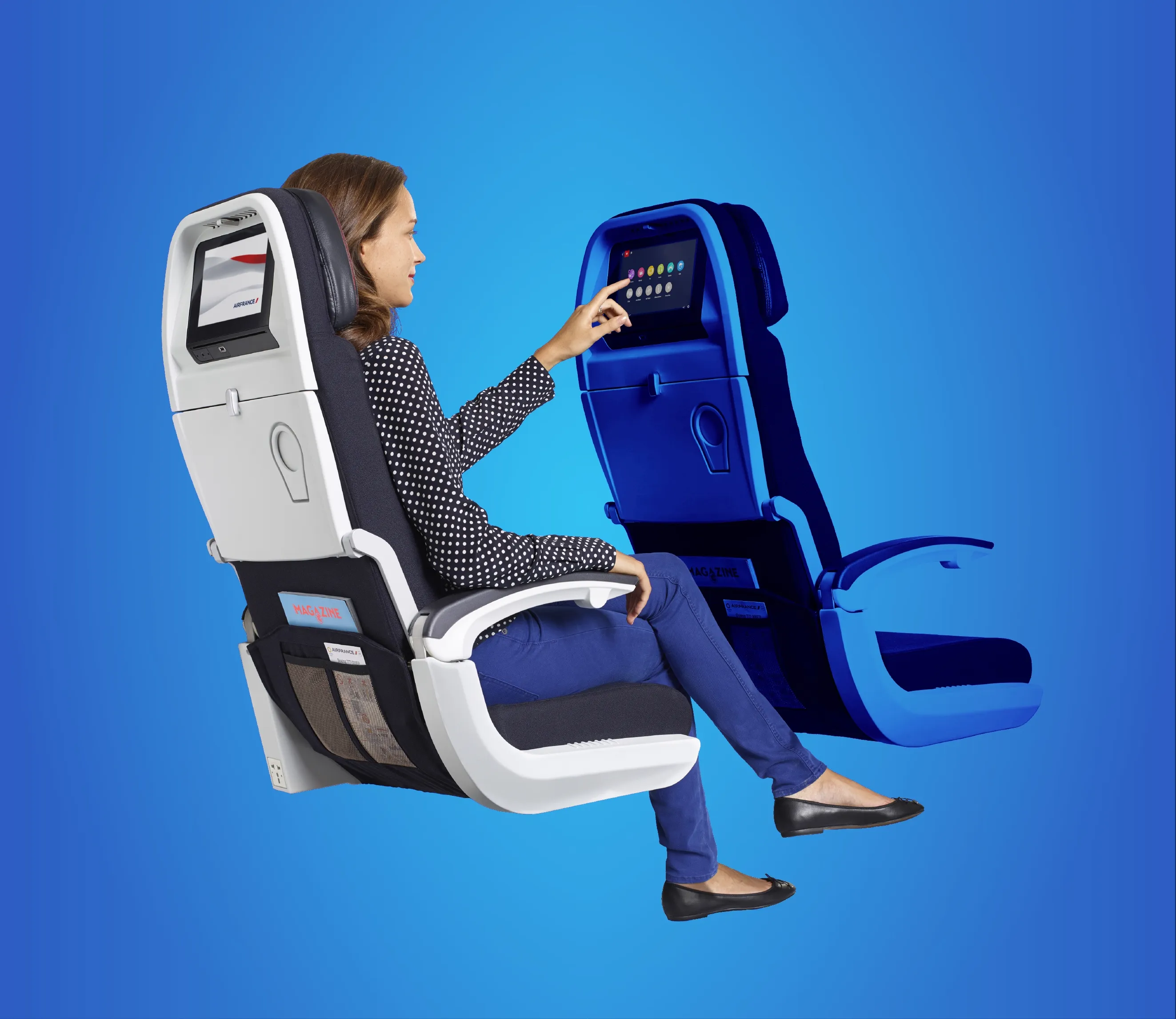
Air France-KLM’s Customer Innovation and Care department was responsible for innovation across the whole passenger experience, with my team focused on the cabin. People visited trade shows or were approached by suppliers, something caught a manager’s eye, and a business case grew up around it. Over time that produced a portfolio of clever but unrelated objects: a smart pillow, a pair of lighting glasses, an app aimed at children. Each could be defended on its own. Together they said nothing coherent about where the group’s experience was going, and nothing connected them to the customers they were meant to serve.
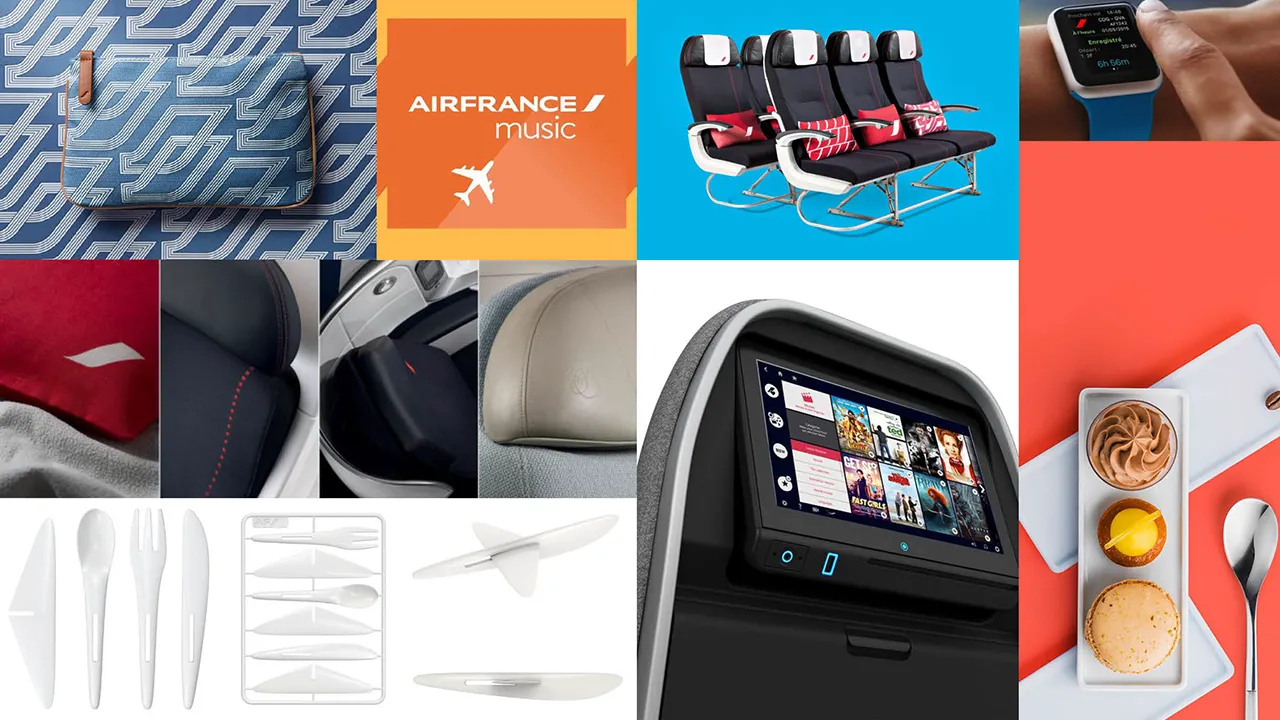
I was the only designer in the entire department. That is the fact that shaped everything else. I had no authority to tell managers more senior than me how to run innovation, and design was not, on paper, mine to own. Whatever I built would have to spread by being useful, not by being mandated.
A matrix that gave innovation a shared frame
On its own a matrix is just a diagram. Its value came from what I connected it to.
I started by building the foundations of an experience matrix: two axes that let any initiative be placed and compared. The first mapped how passengers use their time onboard, from pure efficiency, making the most of the flight, to pure pleasure, enjoying the ride. The second mapped the kind of interaction at play, from rational, functional process to emotional, memorable experience.
I tied it to the group’s existing customer-need framework and to external consumer mega-trend research, so that placing a project on the matrix also located it against eleven recognised travel needs and against where consumer behaviour was heading in the mid and long term. A concept now had to answer to customer needs and trend evidence instead of a supplier’s demo.
Applied across a whole journey rather than a single touchpoint, the frame turned abstract placement into concrete scenarios the team could react to, showing where in a trip an idea actually belonged.
Built to be used, not admired
A framework that only its author can run does not survive its author.
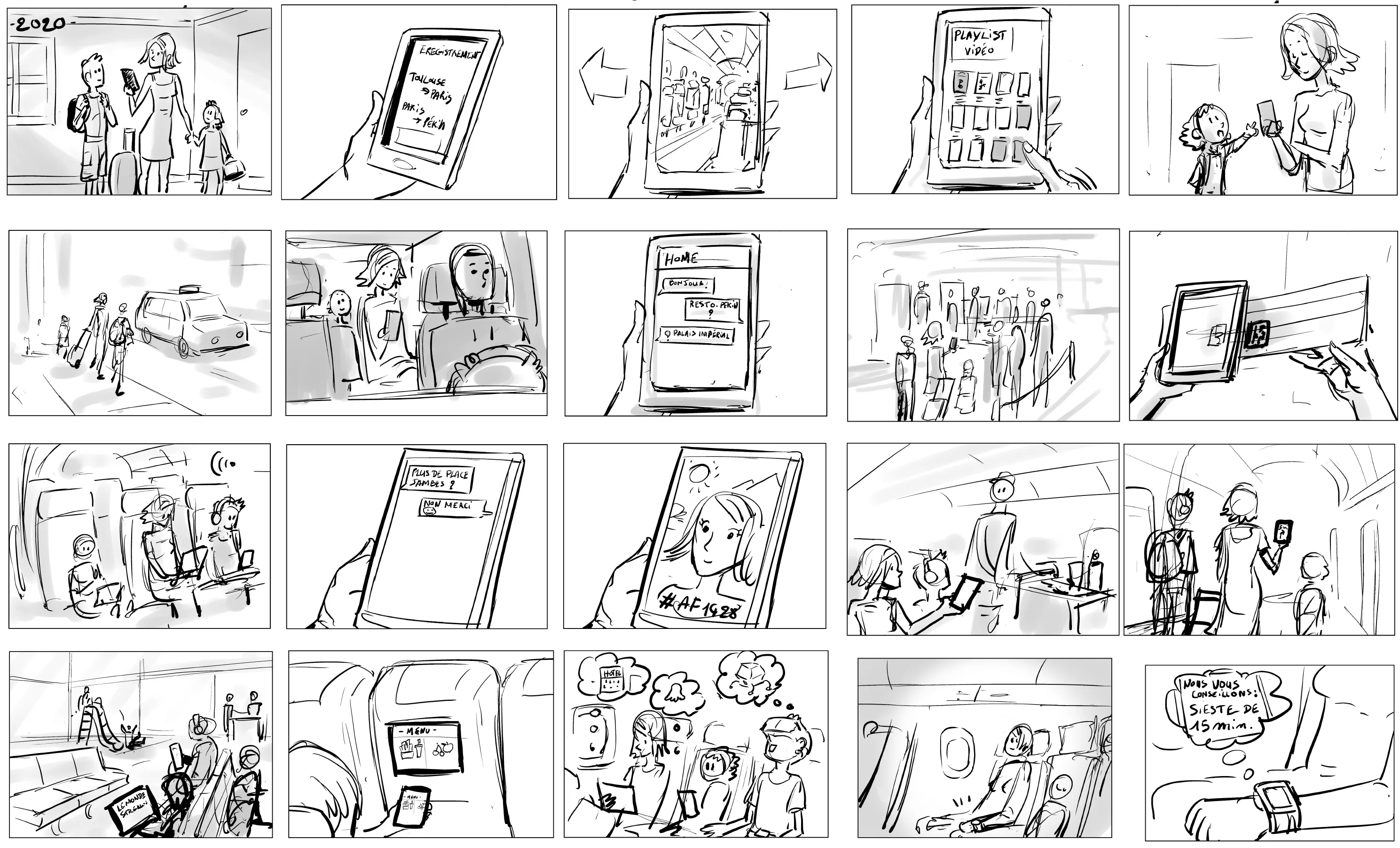
So I designed the method to be picked up by people who were not designers. Around the clusters I built a six-step process, from research and discovery through concept development, business cases and prototyping to deployment, and a project canvas that let each project manager scope an initiative on one page and see exactly where it sat in the group’s wider passenger-experience vision: its customers, the needs it served, the cluster it belonged to, its risks and its stakeholders.
Two things made it spread. The first was that it was lighter to use than the old way of writing a fresh business case from scratch each time. The second was less obvious and more deliberate. I co-created the strategic frame in close working sessions with the Inflight Innovation Manager. A lone, junior-titled designer’s framework is easy to ignore; the same framework carrying a manager’s fingerprints carries authority. Whether or not I would have called it that at the time, the co-authorship was how the method earned the right to travel.
The moment I knew it had genuinely landed came from outside my own team. A manager in a neighbouring Customer Innovation & Care area had been very sceptical, filing the work under someone’s pet project. They had no reason to flatter it. They adopted the cluster structure for their own zone anyway. A method spreading to a team that started out unconvinced is the only proof of adoption I trust.
From scatter to clusters
Read through the matrix, the scatter of standalone gadgets resolved into three coherent groupings.
With the frame in place, I had mapped the entire live portfolio onto it, and I defined those groupings as the department’s innovation clusters:
- Digital Cabin, covering connectivity, content and the data-driven layer of the onboard and journey experience
- Sensory Cabin, covering physical and mental comfort, from food and light to sound and rest
- Standing Cabin, covering the out-of-seat experience, from the welcome on boarding to the spaces passengers use between services
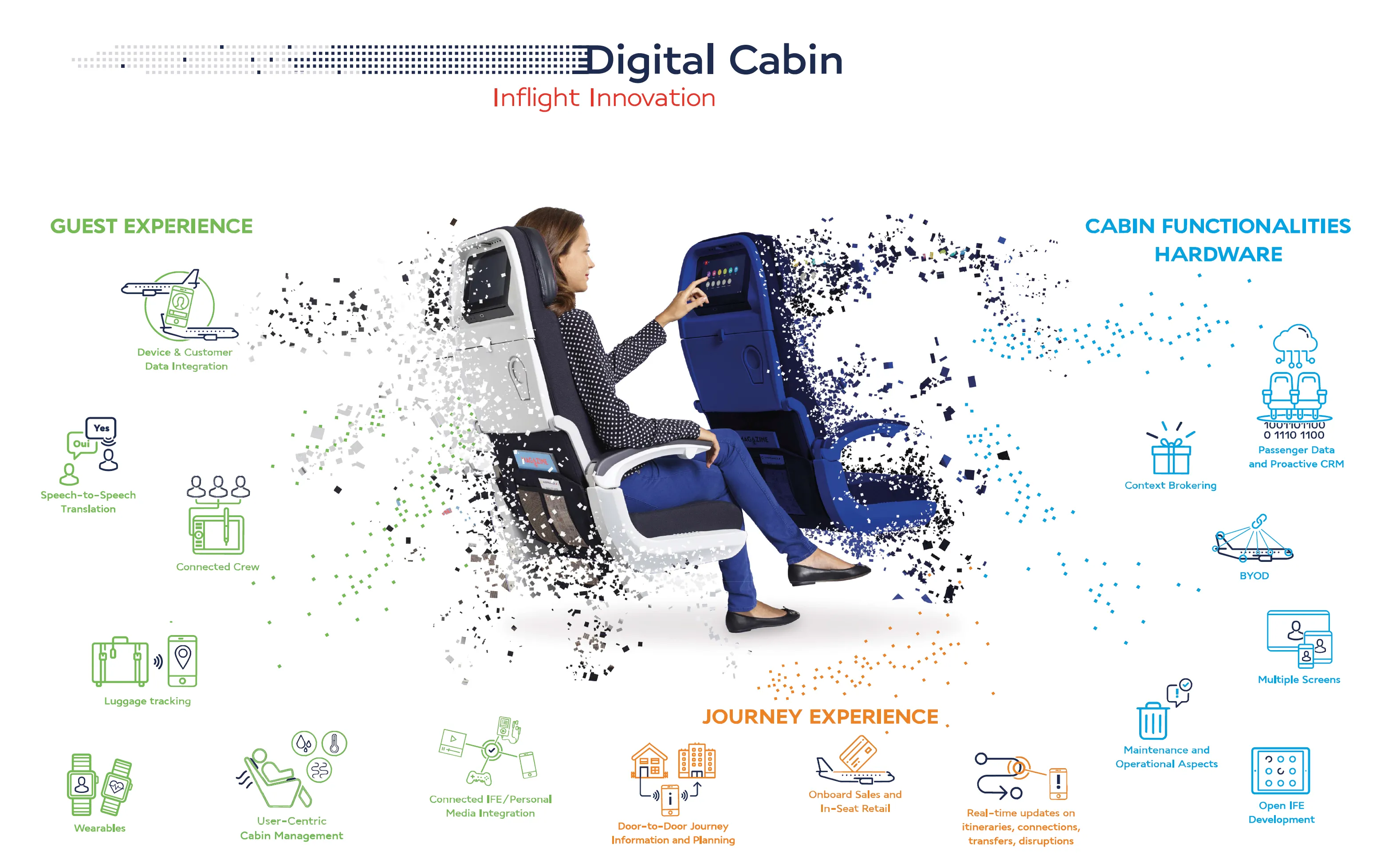
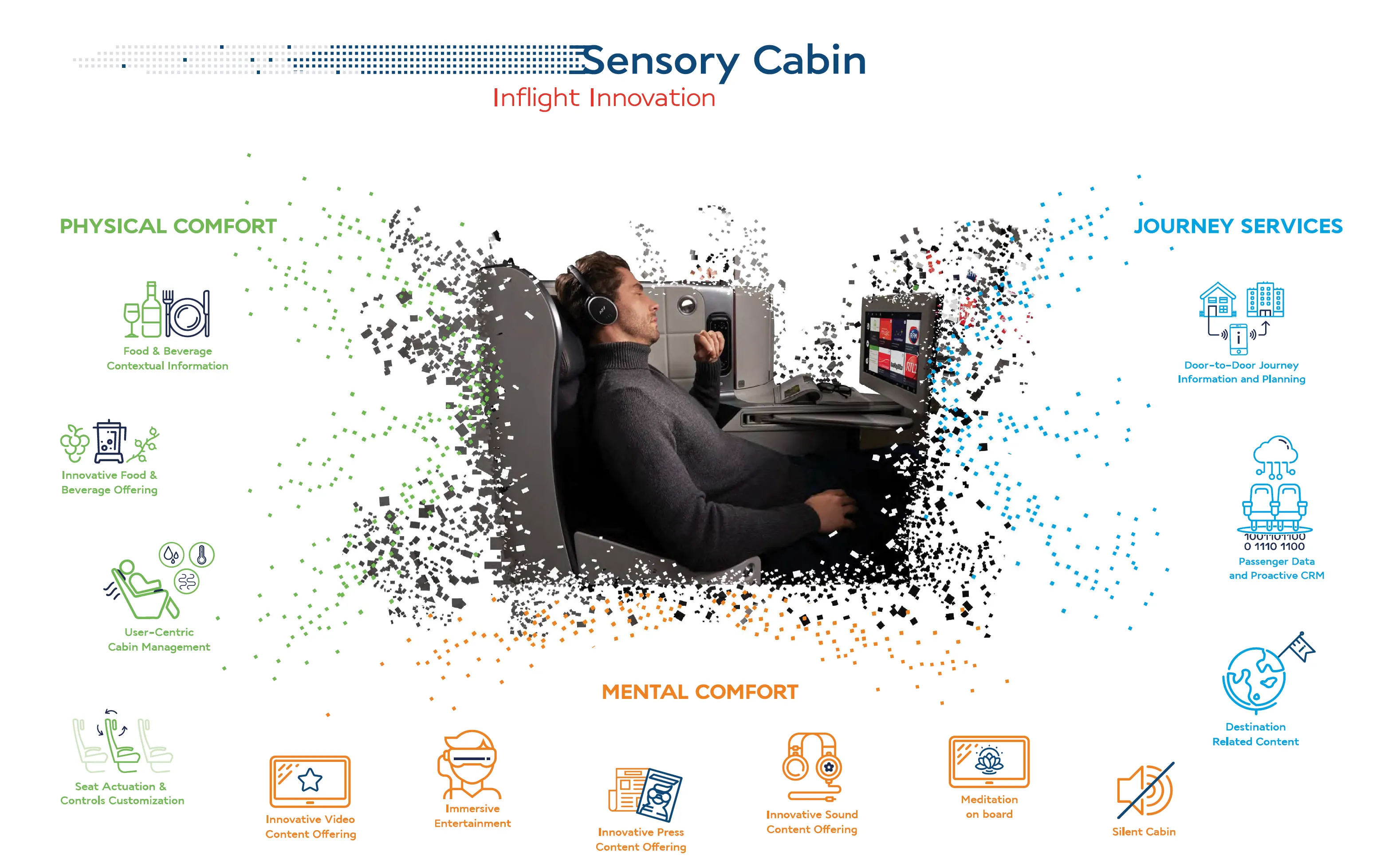
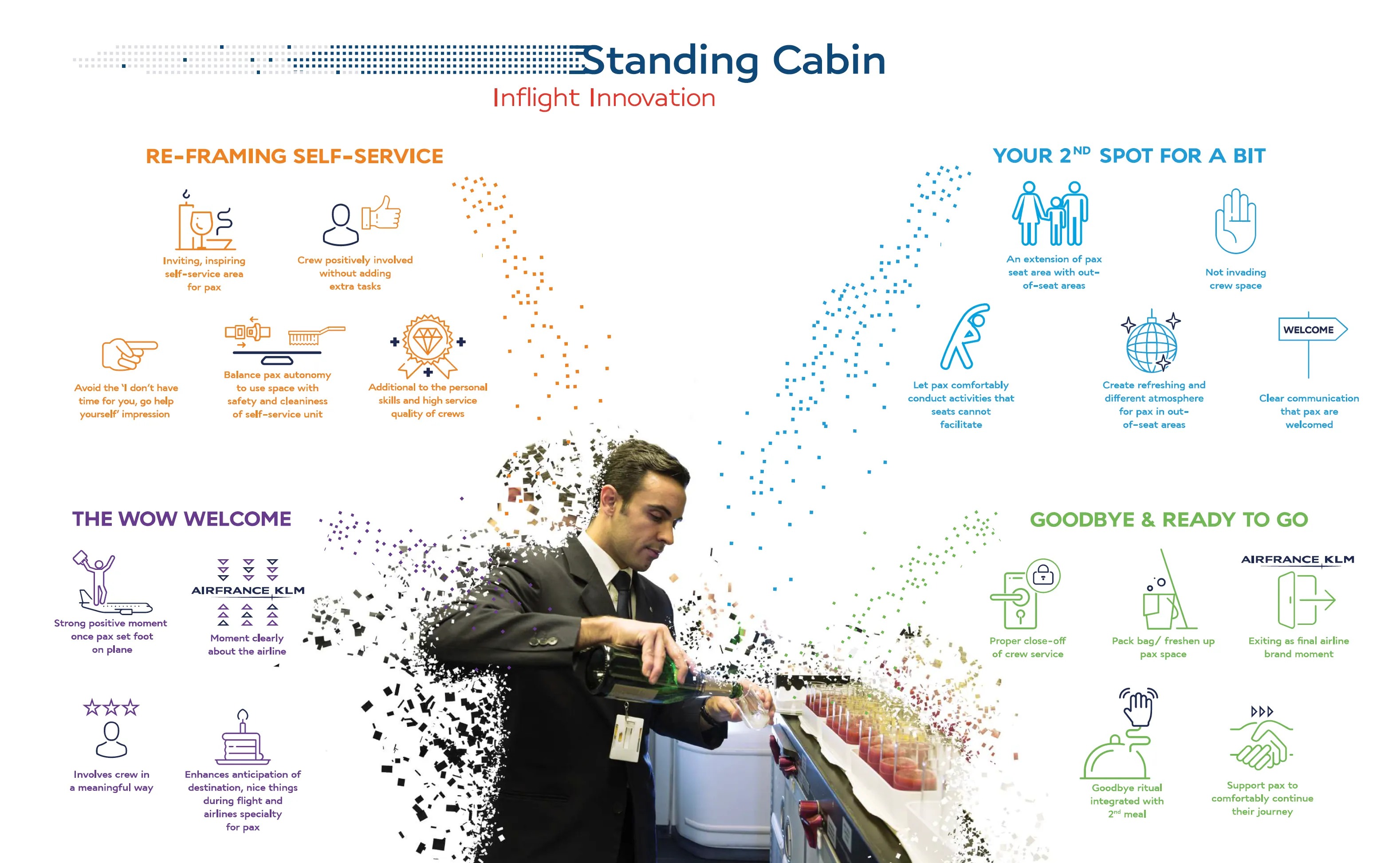
The clusters did two things at once. They gave scattered work a shared language, and they gave the team grounds to let go of things that did not ladder up to any of them. The smart pillow is the example I remember coming off the board: a neat object with no place in the consolidated picture. Saying no to it cleanly, on shared criteria instead of taste, is what the clusters were for.
What the method produced
The clusters became a sourcing engine.
Working through them surfaced a clear opportunity in the boarding and entrance experience, a zone with no design treatment across the group’s fleet while competitors were already using it to express their brand. I authored the benchmarking and brief that defined that opportunity, in partnership with a creative-technology supplier.
That brief did not sit in a drawer. It scoped a co-creation workshop with a leading French design school, where graduate designers expanded and refined the concepts, and it was followed by a sibling workshop on the Premium Economy cabin experience. Both were later installed at the group’s headquarters and presented to several services and to group leadership, an outcome documented in the school’s own annual report. I initiated the partner relationship and authored the briefs; the workshops themselves ran after I had left, which is exactly why they count as evidence the method kept working without me. I also presented the framework several times to the teams behind the group’s new brand launching at the time.
Outcome
The lasting result was a department with a shared way to reason about innovation, where it had none before.
The method was taken up across Inflight and Ground Innovation in both France and the Netherlands, and it outlived my seven-month contract, the clearest signal that it belonged to the teams rather than to me. As the only designer in the room, the contribution that mattered was the judgement that the department needed a way to choose between ideas more than it needed new ones.